How I Got 12 Agent Meetings in Los Angeles (And What Actors Should Know About Getting Representation)
Prefer to watch? Here’s the video….
Scroll to read….
Looking for an agent has always been my least favorite part of being an actor.

Adria Tennor as an (imagined) Avenger character
It has (mostly) NEVER yielded my desired result:
Finding an agent who actually has the leverage to generate real opportunities and auditions.
The process has usually felt completely depressing AND demoralizing….
Like most actors trying to figure out how to get an acting agent, I spent years navigating a process that often feels confusing and opaque.
So when I suddenly found myself without a theatrical (film & TV) agent after a decade, I was not psyched. I sat with my managers, and they agreed, that because of the state of the industry plus the fact that I had no new fancy, flashy (Avenger movie) credits, that I was probably going to have to be agent-less for a while.
And honestly, I thought they were probably right.
And yet…
Within two months of that conversation, I had 12 meetings with theatrical agents in Los Angeles and signed with my top choice boutique agency.
I didn’t do it by luck. And it wasn’t random.
I did it by combining two strategies:
• Brian Patacca’s Agent Goals outreach method
• My own Casting DNA™ framework for clarifying how an actor positions themselves in the marketplace.
Here’s a blow by blow, and my take aways about exactly what I did that WORKED.
First of all, let’s answer this:
Do You Need an Agent to Be an Actor?
One of the most common questions actors ask is:
“Do I need an agent to be an actor?”
The honest answer is: no — but it does change the kinds of opportunities you have access to.
Many actors begin their careers without representation. You can absolutely:
• take classes
• create your own work
• audition for student films and some independent projects
• build footage and experience
And I recommend doing ALL of these things before endeavoring to find representation because it will up-level your chances of finding a good agent exponentially.
However, when it comes to larger commercial projects, network television, studio films, and high-paying advertising work, representation becomes extremely important.
The reason is structural.
Film and television directors are experts in storytelling and filmmaking. They know how to shape performances, work with cameras, and build the world of a project. But they don’t personally know every actor who might be right for a role.
That’s where casting directors come in.
A casting director’s job is to know the acting landscape — who exists, what they’re good at, and who might be right for a particular role. They spend their careers watching actors work, building relationships, and tracking talent across theater, television, film, and commercial projects.
But even casting directors can’t personally track thousands of actors.
So they rely on another layer of the ecosystem: agents.
When a project needs to be cast — especially something moving quickly, like a commercial — the casting office may send an email to trusted agents or release a breakdown through Breakdown Services. Sometimes they’ll reach out directly to a handful of agents they trust and ask them to send options.
At that moment, the agent becomes a filter.
A good agent understands both their actors and the casting office. They know which of their clients are right for the role, and they submit a handful of strong options.
If an agent repeatedly submits actors who are completely wrong for the part, they waste the casting director’s time — and credibility disappears quickly.
But when an agent consistently sends thoughtful, well-matched submissions, something important happens: trust builds.
Casting directors come to rely on agents whose judgment they trust, because every submission reflects on that agent’s taste and professionalism.
When an agent consistently curates well, casting knows they’re not going to waste time sifting through actors who don’t belong in the conversation.
And when that trust develops, casting directors are far more likely to continue reaching out to that agent when new projects arise.
Which means that agent’s actors are seen more often.
And being seen more often is what leads to auditions — and ultimately jobs.
This is why having a smart, strategic agent matters so much.
A great agent isn’t just forwarding submissions. They’re interpreting the industry, understanding their actors deeply, and making sure the right people are being considered for the right opportunities.
That’s the ecosystem actors step into when they pursue representation.
And once you understand how that ecosystem works, the entire process becomes far less mysterious.
Which brings us to the part of the story where things took an unexpected turn.
How I Suddenly Found Myself Agentless
Before I started emailing agents, there was a very practical reason I needed to.
For ten years I had been with the same theatrical agent.

During that time he often encouraged me to work with him across the board — meaning both theatrical and commercial representation under the same roof.
Now this is just my personal perspective, but I generally don’t recommend actors put all their eggs in one basket like that.
And here’s why:
When one agent represents you across the board, your entire career becomes tied to that single relationship. If it ends, you’re suddenly without representation in every lane.
But during a difficult period in my personal life a few years earlier, in an effort to simplify my overwhelm and having to make yet another difficult decision, I agreed to try it. So my theatrical agent also became my commercial agent. All my eggs were now in one basket….
Until the end of last year, however, when it became clear that my commercial representation needed a different strategy.
So I met with a handful of commercial agencies and ultimately signed with a new team that felt like a much better fit.
Which meant I had to tell my theatrical agent I would no longer be working with him commercially.
That conversation… did not go well.
And few days later he called and told me that I should just leave him altogether and go with my new commercial agency across the board — theatrical and commercial.
Which was ironic, because that was exactly what I had just explained to him that I didn’t want.
And just like that, after ten years together, I suddenly found myself completely agentless on the theatrical side.
Now, my managers had actually warned me this might happen.
Given the current industry climate — smaller rosters, cautious development cycles, and agents consolidating clients — they suspected I could end up without theatrical representation for a while.
But instead of sitting back and waiting to see what happened, I decided to approach the situation differently. And that decision is what led to the outreach campaign that resulted in twelve agent meetings.
How Most Actors Try to Get Representation
When actors think about finding an agent, the process can feel daunting—sometimes even impossible.
It can feel like just another audition. One more moment where we put ourselves out there and risk rejection.
So many actors (myself included) approach it cautiously, keeping the effort small and contained rather than treating it like the strategic campaign it actually needs to be.
Here are a few traditional paths actors rely on:
• referrals from casting directors
• referrals from other actors
• being seen in a play or showcase
• networking at industry events
• sending a few outreach emails
And sometimes these approaches work. And often they even work well, especially if you’re 20 years old and have a fresh, hot credit to your name.
But otherwise these approaches are largely built on hope and limited exposure.
You’re relying on the right person seeing you at the right moment — or responding to a small number of submissions.
That’s not a strategy.
It’s more like a lottery ticket.
And once I realized that, I decided to approach my search for representation differently.
Step One: I Clarified My Casting DNA™
Before I sent a single outreach email to agents, I took a hard look at my materials.
Not to make them prettier.
To make them clearer.
I applied the same framework I now teach actors inside Casting DNA™.
That meant reviewing everything an agent or casting director would see first:
• my demo footage
• my headshots
• my Actors Access profile
• the kinds of roles I’ve actually booked over time
And asking one very practical question:
What story do these materials tell about me as an actor?
Because whether we realize it or not, our materials are always communicating something.
Agents and casting directors aren’t just evaluating talent. They’re trying to quickly understand where you fit in the casting landscape.
That’s what Casting DNA™ clarifies.
It’s the pattern in how you naturally show up on screen — the qualities your presence carries and the kinds of roles that energy supports.
Most actors try to demonstrate range in their materials.
But when a reel or profile shows ten different versions of an actor with no clear through-line, it can make the signal harder to read.
Casting DNA™ is about identifying the through-line that already exists in your work.
To do that, I look for patterns such as:
• the types of roles you consistently book or come close to booking
• the qualities your presence naturally communicates on screen
• the actors whose essence overlaps with yours
• the kinds of scenes where your presence feels most alive and effective
Once that pattern becomes clear, your materials stop looking like a random collection of clips.
And they start telling a coherent story about who you are and what you play.
That clarity changes everything.
Your auditions sharpen.
Your reel becomes more focused.
And when you reach out to agents, they can immediately understand where you fit in the market and if they need/want/already have someone like you on their roster.
Once my materials clearly communicated that signal, I was ready for step two.
Step Two: Use a Smart Outreach Strategy
Brian Patacca’s Agent Goals strategy is one of the most thoughtful systems I’ve seen for actor outreach to agents and managers.
The method involves:
• crafting three strategic outreach emails
• using a comprehensive and up-to-date industry database to reach agents across your market
• sending your materials in structured waves rather than cherry-picking a few agencies
One of the smartest parts of the system is that you blanket the market with your materials.

The literal UNIVERSE
Brian and his team have compiled an enormous database of ALL the agents and managers in the literal UNIVERSE, which means actors can reach every representative in any city of their choosing.
So, instead of guessing who might respond…
…you let the market respond to you.
This approach creates two powerful advantages.
First, it dramatically expands the number of opportunities available to you.
Instead of hoping that you send your materials to the right agent, you put your work in front of the entire market. So you know you’ve done your due diligence.
Then you’re not guessing if you’ve sent to the right people because you’ve sent to ALL the people.
And you let the industry show you where the interest actually is.
The second advantage is something actors rarely experience in this business:
CHOICE.
When you reach out broadly, you’re no longer waiting to be selected.
You creating multiple conversations.
And when several agents express interest, you get to evaluate them just as much as they evaluate you.
That’s a very different dynamic.
Actors are used to feeling powerless in this industry.
But when you approach representation strategically, the relationship becomes what it should be:
a mutual decision about building a career together.
How My Meetings Actually Went
Once the emails went out, responses started coming in over the next few weeks. As I said, I sent three emails over the course of three weeks.
Some agents replied right away to the first email I sent. (And as it turns out, the agent I signed with was one of the first to respond to my very first email.)
Some took longer. Some responded to my very last email on the day I was making my final decision.
Some wrote back and explained they weren’t able to take any new clients, but wished me luck. Some even said they couldn’t take me, but wanted to tell me how talented they thought I was. I appreciated these responses almost more than the ones asking to meet me, because it felt like an unnecessary but genuine and human response. And because those agents had taken the time to write those personal responses, I took the time to make absolutely sure, that I deleted those email addresses off the subsequent email blasts so I didn’t look like a lame jerk!
Of course, most of the agents didn’t respond at all. And that’s completely normal.
But enough agents were curious about my work that I ended up taking twelve meetings with theatrical agents across Los Angeles.
Brian encourages the actors in his program to SEND ALL THE EMAILS, and TAKE ALL THE MEETINGS. This is part of his process. And after going through it two times now, once to find my managers and now to find my new agent, I understand why he advocates for this. Because it amplifies the experience of exploring all your options, and then making an informed choice.
I did almost all my meetings on Zoom. One or two agencies wanted me to show up in person to open calls. I opted not to attend those because of time and logistics. A couple of agents just wanted to chat over the phone, and this was really nice actually. I felt like I was able to focus on our conversation and not what tricks Zoom was playing on me or how my hair looked that day!
My conversations were incredibly illuminating.
Not just because I was meeting potential representatives, but because I was getting to talk to a bunch of incredible people who were interested in meeting me, who loved actors and representing them, and helping them get jobs. I got to hear about all of these ingenious ways these agents were cutting through the noise and leveraging their relationships with Casting. How they and their clients were thinking outside the box of how things have always worked now that things were working completely differently since Covid, since the strikes, since the fires….and it was EYE OPENING. I LEARNED SO MUCH!
Every single agent asked me to tell them about myself and my career, the highlights, what I loved, what I didn’t, and where I wanted to go and how I saw myself getting there. Fortunately, I have a really clear picture of what I want the future to be, and a pretty good idea of how I think I’ll get there. I also didn’t hold back on the hard stuff, and not one agent I met with decided not to work with me because of anything I shared with them in our meeting. I know this because all twelve of the agents I met with told me that they’d love to rep me. So I got to choose, with the help of my managers, who the right person for our team was.
Reframing “Rejection”
I was very fortunate. I got to meet with quite a few terrific agencies. But there were quite a few I didn’t meet with. I bring this up because actors often interpret representation through the lens of rejection.
If an agent doesn’t meet them or sign them, the actor assumes it’s because of their own deficiency.
But that’s not actually how the business works.
An agent’s job is to sell an actor to casting.
And if they don’t think they can do that successfully, then signing that actor doesn’t help anyone.
In that sense, a “no” from an agent isn’t rejection. It’s protection.
It simply means that particular agent doesn’t feel they’re up to the task of selling you in the marketplace. And that’s on them, not you. And it’s useful information.
Because what you want is not any agent.
You want the agent who genuinely understands where you fit and how to get you work.
And this kind of broad outreach makes that much easier to discover.
What I Learned From 12 Agent Meetings
The meetings themselves were incredibly valuable.
I met agents who genuinely love actors, love film and television, and love helping performers build careers.
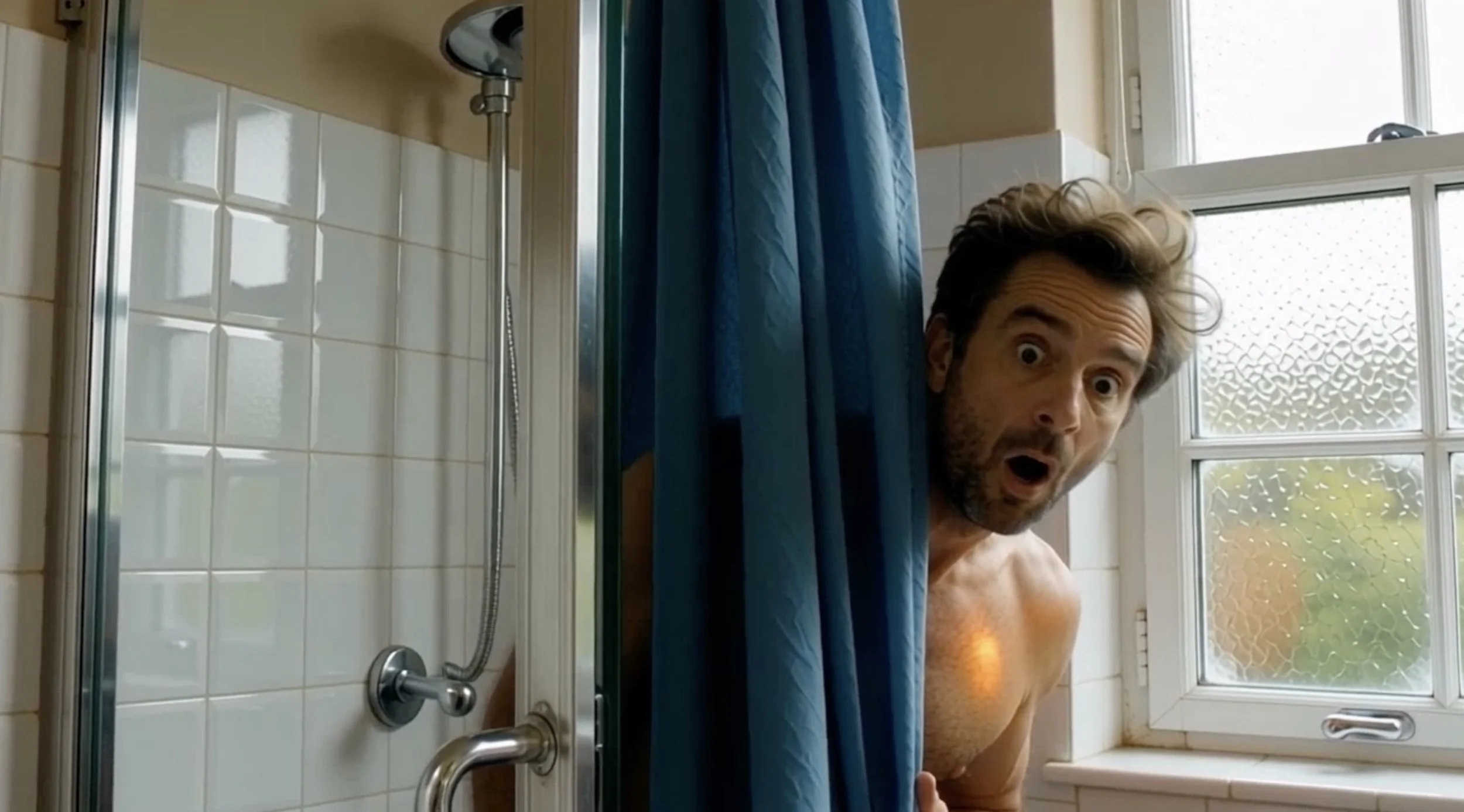
Creative Selftape
I also learned things I never would have discovered otherwise.
For example: One agent told me about an actor who stopped filming self-tapes against a blank wall and instead fully committed to the scene. The agent called this “Creative Selftaping.”
In one case, the actor booked a job from a tape where he performed a scene in the shower — speaking through the shower curtain — because that’s what the scene required.
Another agent told me about a seasoned actor client who stopped booking once self-tapes became standard.
After working with acting coach Annie Grindlay, the actor adjusted one key element of his tapes and started booking again.
These insights are gold.
And I never would have heard them if I hadn’t taken ALL the meetings.
The Unexpected Power Shift
Something else interesting happened during the outreach process.
As I said, I sent three rounds of emails over the course of three weeks.
Anyone who replied — yes or no — I removed from the list so they wouldn’t keep receiving emails.
By week three the first line of my email said something like:
“Hi {FirstName} – I’ve had a slew of agency meetings and will make a final decision next week. Before I do, I wanted to reach out one last time in case you’d like to talk about working together.”
One agent responded with something fascinating.
She replied and said she only meets with actors who tell her she’s their first choice.
I wrote back and politely asked: “How would I know if you were my favorite without meeting you?”
She replied: “You’d need to do your research. Most agents feel this way, but they won’t tell you.”
That moment revealed something important.
This agent was uncomfortable that I had the power to choose who I wanted to be with. She didn’t like that I hadn’t made her my only favorite choice.
Because I had contacted the entire market, I wasn’t hoping someone would take me. I was going to choose from a rather long list of options.
Actors often have very little power in this industry — and I think that’s because we’re taught and encouraged by the people that we see as gatekeepers to give away what little we have.
Brian’s strategy helps shift that balance back to the actor.
Thank you, Brian.
The Two Things That Got Me Signed
If you take one thing away from this story, it’s this:
You need both parts of this equation.
Brian Patacca’s Agent Goals strategy gets agents to open your email.
Casting DNA™ is what makes them interested once they look at your materials.
You can reach out to the entire city — but if your materials don’t clearly communicate who you are and what you’re capable of, the outreach won’t land.
And this is where many actors unintentionally sell themselves short.
Most demo reels are built from whatever work an actor happened to book along the way.
There’s nothing wrong with that. That’s how the industry has done it for years..
Actors had no choice but to wait until a project eventually aired, request the footage, and then add it to their reel.
But that process often creates a collection of clips that feel random rather than intentional.
They reflect what happened to come along — not necessarily the full scope of what the actor is capable of.
But today, actors have a different option.
We can create material intentionally.
Inside Casting DNA™, the first step is identifying the actor’s casting prototypes — a small group of recognizable actors whose essence overlaps with theirs. Not as an imitation exercise, but as a way to clarify how the industry already understands that kind of presence.
Once that becomes clear, we source or create scenes designed to telegraph that essence on screen.
Actors build the inner architecture of those scenes using elements like:
• place
• relationship
• moment before
• conflict and pursuit
• active communication with the other character
From there, we layer in the human contradictions that make performances magnetic — humor, resistance, mischief, secrets, and opposing impulses.
And finally, we create a clear shoot-day plan so the performance actually translates on camera.
The result isn’t just “more footage.”
It’s footage that clearly communicates who the actor is, what they play, and the full scope of their potential.
When your materials are:
• focused
• intentional
• and transmitting a clear signal
agents and casting directors can understand you immediately.
And when that happens, the right opportunities start to appear. Hollywood LOVES when an actor WILLS their career into existence.

Want to Test Your Casting DNA™?
If you’re curious what your current materials are communicating about you as an actor — and whether there may be gaps you want to fill — I created a free tool to help you take a closer look.
TRY Casting DNA™ Pre-Check HERE
It helps actors identify:
• what their current materials are already communicating about them
• where things may be unclear or incomplete
• where there may be opportunities to strengthen their materials by creating new footage
And if you try it, let me know what you discover.
I’m a total geek about this stuff!! 🤓
Want to Go Even Deeper?
If the Pre-Check reveals gaps in your materials — or simply makes you curious about how to clarify your casting strengths — that’s exactly the work we do inside Casting DNA™.
Casting DNA™ is a hands-on cohort where actors:
• identify their casting prototypes
• learn to identify how they function best in story
• source scenes that highlight their strengths and potential
• build nuanced, performances with depth and specificity
• and walk away with a clear shoot-day plan for creating their powerful new demo reel material
The goal is simple:
To help actors create footage that clearly communicates who they are, what they play, and the kind of roles they’re capable of carrying in the marketplace.
Learn more about the Casting DNA™ Signature Scene Cohort here.
If you’re not sure what your next step should be, you can also book a free 15-minute strategy session and we’ll take a quick look at your materials together.
And once you’ve got your materials firing on all cylinders, go check out Brian Patacca’s #AgentGoals. I cannot recommend the course or Brian enough!
Also mentioned in the post - Annie Grindlay Studio.
